
The future of material handling: how automation is transforming logistics
Innovation in motion: the rise of automation in material handling
Modern logistics demands more than just moving goods from A to B. It requires scalable, data-driven solutions that optimize space, labor, and time. That’s where automated material handling systems come in, bridging the gap between operational efficiency and business continuity.


From cost center to value creator: redefining logistics through automation
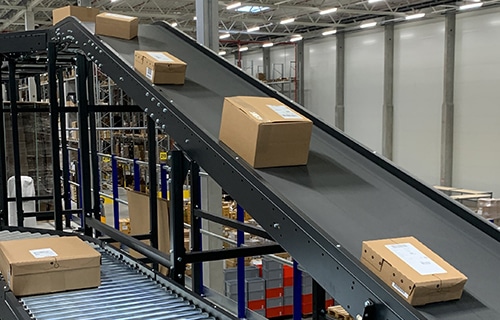
Valor’s modular Qliqflow system is a prime example. It allows for flexible scaling without operational disruption. Whether you’re adding new product lines or expanding to new facilities, modular automation supports continuous growth without reengineering the entire infrastructure.
Key trends shaping the future of material handling
Scalable modular systems
Flexible design is no longer optional. Scalable, modular systems allow businesses to start small and grow fast. They minimize initial investment while enabling seamless expansion. Valor’s modular architecture ensures that material handling equipment fits your unique operational flow, now and in the future.
Human-machine optimization
Automation doesn’t replace people, it empowers them. The future lies in balanced collaboration where machines handle repetitive tasks while humans oversee strategy and exception handling. By automating the right processes, businesses improve safety, reduce fatigue, and boost throughput.
Data-driven decision making
Today’s systems are smart. Material handling is now tightly integrated with warehouse management systems (WMS) and enterprise resource planning (ERP) platforms. Real-time analytics and performance dashboards allow decision-makers to respond proactively: adjusting flows, anticipating delays, and maintaining optimal performance.
Technology integrations driving automation
Several innovations are redefining what’s possible in material handling:
- Automated guided vehicles (AGVs) and autonomous mobile robots (AMRs) increase warehouse flexibility. AGVs follow predefined paths, ideal for structured environments, while AMRs navigate dynamically, adapting to real-time changes.
- Robotics enhance speed and precision in tasks like picking and packing. While initial investment may be high, the long-term ROI is significant due to reduced labor costs and higher throughput.
- Automated storage and retrieval systems (AS/RS) enable high-density storage and rapid access, saving space and time.
- Warehouse management systems (WMS) act as the digital backbone, coordinating machines, inventory, and data.
- Internet of Things (IoT) devices provide real-time tracking, predictive maintenance, and environmental monitoring.
- Artificial intelligence (AI) and machine learning optimize routing, demand forecasting, and inventory control, enabling predictive logistics.
These technologies bring clear advantages: higher accuracy, real-time control and reduced reliance on manual labor. But they also require upfront investment, system integration, and change management. Selecting the right mix of technologies is critical and depends on your warehouse size, business model, and long-term strategy.


Why automation in material handling is no longer optional
From next-day delivery expectations to the shortage of skilled labor, the pressure on logistics operations is rising. Automated material handling provides the speed, accuracy, and consistency required to meet modern demands. Companies that delay investing in advanced logistics automation risk falling behind.
Forward-looking businesses understand that material handling is not just a logistics function, it’s a competitive differentiator. By implementing automated handling solutions, they lay the foundation for resilience, growth, and long-term cost efficiency.
Valor as your automation partner
At Valor, we don’t just build systems, we build smart logistics solutions. With deep technical expertise, a modular design philosophy, and a commitment to measurable results, we help logistics providers turn their warehouses into performance hubs. Looking to future-proof your material handling strategy? Contact our experts today and discover how automation can transform your logistics operation.
Read our other blogs

Modular conveyor belts: flexibility and scalability in material handling
Modular conveyor belts offer flexibility and scalability, enabling cost-efficient solutions that optimize warehouse automation and growth.
Choosing the right internal transport system for your warehouse
Choosing the right internal transport system is essential for optimizing warehouse efficiency for sustained growth and cost savings.
Contact details
Should you have any questions or feel we can be of assistance, feel free to contact us at any time.
+31(0)412 857821
info@valor.world
KvK: 63382407
