
Modular conveyor belts: flexibility and scalability in material handling
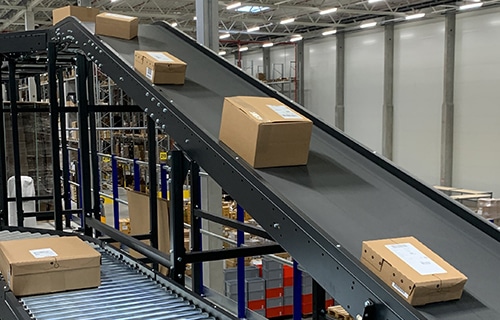
Modular conveyor belts ensuring flexibility in material handling
In an era defined by rapid technological advancements, material handling systems are evolving to meet the increasing demands of global logistics. Traditional systems, once seen as adequate for basic transport functions, can no longer keep pace with the scale and complexity of modern operations. To stay competitive, businesses are turning to modular conveyor belts, which offer unmatched flexibility and scalability. Two critical attributes for navigating the ever-changing landscape of logistics and warehousing.


The rise of modular conveyor systems
Material handling isn’t just about moving goods from point A to point B. It’s about optimizing every aspect of your supply chain to ensure efficiency, cost-effectiveness, and adaptability. Modular conveyor belts are central to this shift, allowing businesses to scale and adapt their systems with ease as their operations grow.
Gone are the days when material handling systems were bulky, static, and difficult to modify. The modern supply chain requires systems that can be easily adjusted, expanded, or reconfigured without disrupting operations. Modular conveyor systems empower businesses with the flexibility to meet the evolving demands of their industry.
Flexibility in layout and application
One of the most significant advantages of modular conveyor systems is their ability to scale alongside your business. Whether you’re adding a new product line, expanding into a new facility, or simply adjusting to seasonal demand, modular conveyors make it possible to expand and reconfigure your systems without the need for a complete overhaul.
In industries where growth is unpredictable, flexibility becomes an asset. Modular systems can be designed to fit your current needs, while also providing the ability to expand easily as your operations grow. This means businesses can start small, minimize initial investment costs, and gradually scale up, ensuring the system can always meet future requirements.
Benefits for modern warehouses
Valor’s modular Qliqflow system is an exemplary model of how modular design can transform logistics operations. The Qliqflow system combines standardization with modularity, allowing businesses to customize and scale their conveyor solutions with ease. Its key benefits include:
1. Rapid scalability: As your warehouse expands, the Qliqflow system can easily grow with you. Adding additional conveyor belts, adjusting layout configurations, or integrating new components can all be done quickly without significant downtime.
2. Cost efficiency: Modular conveyor belts minimize initial investment by enabling businesses to build their system piece by piece. This allows for controlled spending, reducing the risk of overspending on unnecessary equipment.
3. Seamless integration: Thanks to modularity, the Qliqflow system integrates smoothly with existing workflows and can be adapted to fit a wide range of operational needs. Whether the challenge is automating new processes or adapting to new types of goods, this flexibility ensures operational continuity.
Balancing efficiency and costs
In the past, warehouses were often viewed as cost centers necessary, but not essential to strategic growth. However, with the rise of automated material handling systems, that perception is changing. Modern warehouses have evolved into powerful strategic assets, driven by automation that boosts efficiency, reduces labor dependency, and offers unparalleled scalability.
The integration of modular conveyor belts is a perfect example of how operational costs can be transformed into value creation. Through greater automation, businesses can reduce their reliance on manual labor, achieve faster processing times, and enhance throughput all while keeping their systems flexible and scalable.
Key trends shaping the future of material handling
The logistics industry is constantly evolving, and modular conveyor belts are at the forefront of this transformation. To stay competitive, businesses must embrace key trends that are reshaping how goods are handled in warehouses. Below are some of the most significant logistics automation trends driving the future of material handling:
Scalable modular systems: adapt as you grow
As businesses grow and evolve, so do their material handling needs. The future of warehouse systems lies in the ability to adapt easily to new requirements. Scalable modular systems allow companies to start small and expand quickly, minimizing upfront investment while enabling easy upgrades. With modular conveyors, warehouse managers can scale their operations incrementally, adjusting to market demands without requiring costly system redesigns.

Human-machine optimization
Warehouse automation doesn’t mean replacing people, it means empowering them to focus on high-level tasks while machines handle repetitive ones. Modular conveyor belts play a crucial role in achieving this balance. By automating tasks like sorting, transporting, and packaging, businesses can improve safety, reduce physical strain on workers, and optimize workforce productivity.
Automation allows human operators to move away from mundane, labor-intensive tasks and instead focus on strategic, decision-making roles. This creates an environment where both humans and machines contribute to overall efficiency and success.
Data-driven decisions, the new standard for modular conveyors
In today’s world, data is one of the most valuable assets in any warehouse. Modern material handling systems are integrated with warehouse management systems (WMS) and enterprise resource planning (ERP) platforms, allowing companies to monitor operations in real-time.
With advanced data analytics and performance dashboards, managers can track the status of each product on the conveyor belt, anticipate bottlenecks, and make adjustments on the fly. This data-driven approach ensures optimal performance and allows businesses to continuously improve their processes.
Valor as your partner for modular conveyor belts
At Valor, we don’t just build systems, we build smart logistics solutions. With deep technical expertise, a modular design philosophy, and a commitment to measurable results, we help logistics providers turn their warehouses into performance hubs. Looking to future-proof your material handling strategy? Contact our experts today and discover how automation can transform your logistics operation.
Read our other blogs
Choosing the right internal transport system for your warehouse
Choosing the right internal transport system is essential for optimizing warehouse efficiency for sustained growth and cost savings.

The future of material handling: how automation is transforming logistics
Automation is revolutionizing material handling by integrating modular systems, robotics, and AI to create smarter logistics operations.
Contact details
Should you have any questions or feel we can be of assistance, feel free to contact us at any time.
+31(0)412 857821
info@valor.world
KvK: 63382407
