Store more totes within your available footprint and retrieve the right inventory when the operation needs it. Valor integrates Rainbow Dynamics’ RackBot into modular goods-to-person solutions designed around your SKU profile, peak throughput and financial targets.
What is RackBot?
RackBot is a tote-based robotic storage and retrieval solution. Robots move within a multi-level rack structure to access totes and bring them to the storage interface for onward transport. Combined with GroundBot and picking workstations, this creates a goods-to-person process that reduces picker travel and supports predictable stock presentation.

Designed around storage density and access
RackBot makes use of warehouse height instead of relying entirely on long manual picking aisles. Single-deep and double-deep storage configurations offer different balances between density and accessibility. The optimal arrangement is determined by SKU velocity, tote movements, replenishment frequency and retrieval demand — not by density alone.
→ Single-deep storage
One tote is stored at each rack depth position. This provides direct access to the stored tote and can suit operations where frequent access and responsive retrieval are priorities.
→ Double-deep storage
Two-deep positions increase storage density within a given footprint. Valor assesses the effects on access strategy, stock allocation and throughput before recommending a configuration.

RackBot technical capabilities
Rainbow Dynamics specifies a maximum operating height of up to 8.5 metres, tote fetch times as low as 3 seconds and up to 150 tote movements per RackBot per hour. These are supplier-stated maximum or indicative figures, not a guarantee of site-wide throughput. Achievable performance depends on rack design, travel distances, tote allocation, robot fleet, workstations and system scheduling.
The platform supports tote payloads up to 30 kg and can be engineered around standard shelving configurations, subject to project-specific assessment. System dimensions, operating conditions and performance should be confirmed against the selected robot configuration and final engineering specification.
From storage robot to complete picking operation
The robot is only one part of the throughput equation. GroundBot provides horizontal tote transport to the workstation; ergonomic workstations and visual picking guidance support the operator; and conveyor interfaces can route completed totes towards consolidation, packing or dispatch. Valor designs these interactions together to prevent bottlenecks shifting from one process to the next.
Why integrate RackBot with Valor?
→ An engineering partner with wider warehouse expertise
Valor has established its expertise in person-to-goods automation through modular conveyors, sortation, software and controls. The addition of RackBot extends our capabilities into goods-to-person storage while keeping one consistent approach to operational design.
→ Shared focus on functionality and simplicity
We chose Rainbow Dynamics because its modular robotics and straightforward design principles complement our Qliqflow philosophy. The aim is dependable performance and an understandable solution, rather than excessive customisation or unnecessary technical complexity.
→ An investment sized to the requirement
Valor starts with the actual storage and retrieval requirement. We model the number of locations, robots, workstations and associated transport capacity needed now, alongside realistic expansion stages. This approach prioritises a compelling initial business case and a strong, sustainable ROI.
→ Integration from picking to dispatch
Where appropriate, we integrate RackBot and GroundBot with Qliqflow conveyor modules, warehouse controls and upstream or downstream equipment. That allows the entire material flow to be designed and supported as a coordinated system.

Is RackBot right for your warehouse?
RackBot is worth evaluating in tote-based environments with large SKU assortments, costly picker travel, constrained storage space and demanding order profiles. We will also assess whether a different storage or picking approach is more appropriate for heavy, oversized or unusually fast-moving products.
Discuss a RackBot concept with Valor
Send us your current SKU count, tote profile, rack height, expected retrieval rates and peak-order pattern. Valor can help you evaluate storage density, operating capacity and potential ROI before committing to a design. Contact info@valor.world.

Get in touch!
If you’re looking for a solution that’s scalable, cost-effective, and tailored to your warehouse operations, contact Valor today. Our team is ready to help you transform your material handling processes and achieve higher efficiency.
Frequently Asked Questions
How does RackBot work?
RackBot automatically stores totes within a multi-level rack structure and retrieves them when inventory is needed. The RackBot robot accesses the required tote within the rack and brings it to the picking area.
How do RackBot and GroundBot work together?
RackBot handles tote access inside the storage structure while GroundBot supports horizontal movement and workstation delivery, creating a coordinated goods-to-person fulfilment flow.
How does RackBot differ from cube storage?
RackBot uses a multi-level rack arrangement with robotic tote retrieval. Cube-based systems use a different grid and access architecture. The appropriate choice depends on storage density, tote accessibility, available building geometry and required throughput.
Can RackBot capacity grow later?
A modular design can allow additional robot capacity, storage and workstations. Feasibility and future performance depend on the space and infrastructure reserved in the initial design.
Who manufactures RackBot?
RackBot is developed by Rainbow Dynamics. Valor engineers the application, integrates the wider material handling system and supports implementation for its customers.
How is RackBot different from AutoStore?
RackBot and AutoStore are both goods-to-person systems, but RackBot uses a flexible multi-level rack structure with robots retrieving totes directly from storage. AutoStore uses a cube-based grid with robots operating on top. RackBot is particularly well suited to operations that value direct tote access, layout flexibility and scalable storage configurations.
How does RackBot maximize warehouse storage density?
RackBot maximizes storage density by using vertical, multi-level rack structures. The system can operate at rack heights of up to 8.5 metres and can use Single-Deep or Deep2 storage configurations. This allows warehouses to make greater use of available vertical space while automating tote retrieval.
What is the difference between Single-Deep and Deep2 RackBot configurations?
Single-Deep stores one tote deep and provides direct access to each tote. Deep2 stores totes two positions deep, increasing storage density within the same footprint and pairing with an AMR for horizontal transportation. The choice between the two configurations depends on the warehouse's storage requirements, inventory profile, and operational needs.
Our projects

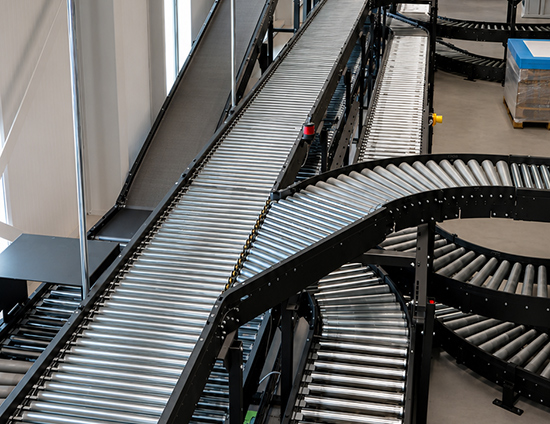
Automated conveyor system for Bausch+Lomb
We made an automated conveyor system for Bausch+Lomb with barcode-based routing.
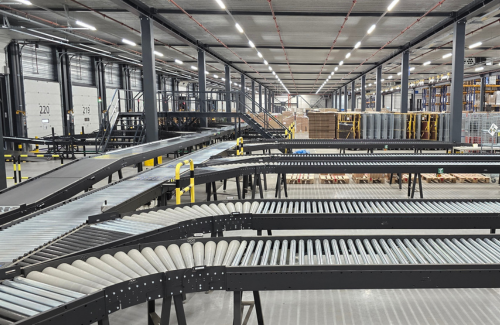
De Bijenkorf’s warehouse automation
We designed and build the Bijenkorf warehouse automation, that includes sorters and packers.
Extendable conveyor for a logistics provider
We built around a custom-developed extendable conveyor which improves operational ergonomics.